
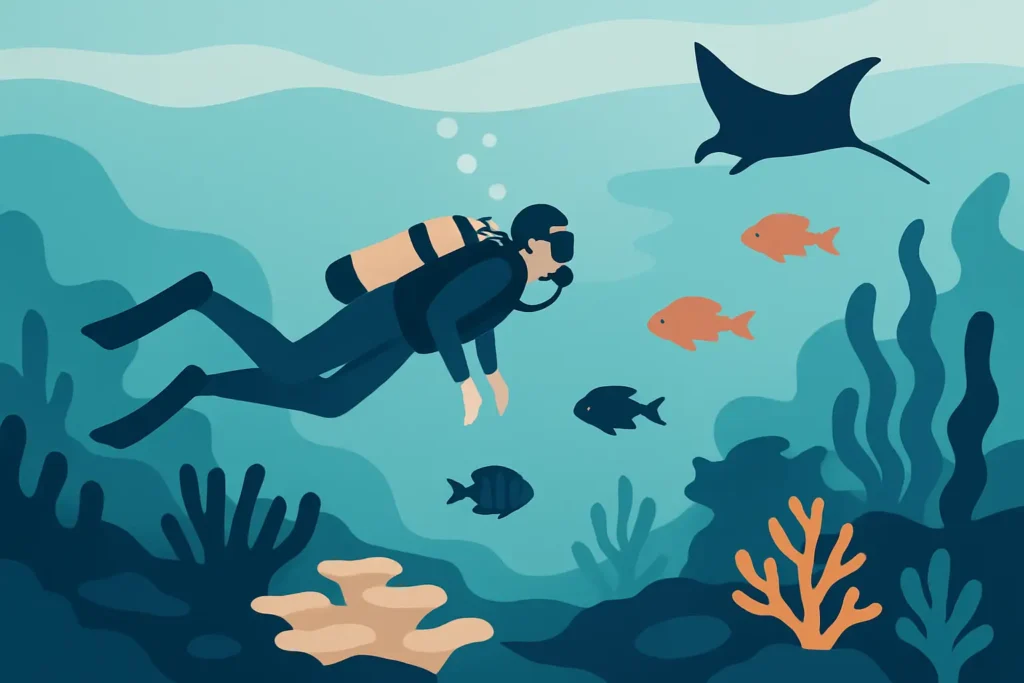
You drop below the surface and the ocean turns theatrical fast – a bright wall, big coral heads, and that feeling that something large could glide past at any second. That’s Banana Reef. It’s one of the Maldives’ best-known dive sites for a reason: the scenery is bold, the marine life shows up, and the route can be as mellow or as spicy as the current decides to make it.
Banana Reef Maldives diving isn’t just a “check the box” excursion. It’s a site that rewards a little planning. Pick the right day and it’s an easygoing, color-soaked cruise with turtles and reef sharks. Pick the wrong tide and it becomes a thrilling drift that demands buoyancy control and calm focus. Either way, it’s pure Maldives: turquoise on top, electric life below.
Why Banana Reef still earns its hype
Banana Reef sits in North Malé Atoll, not far from the main airport hub. That accessibility is exactly why it became famous early – and why it’s stayed famous. The reefs here don’t feel like a quiet garden; they feel like a living amphitheater. You get structure (caves, overhangs, swim-throughs), plus fish density that makes the water look busy in the best way.
The “banana” name comes from the site’s curved shape, and that curve matters underwater. It influences how you’ll move across the reef depending on current direction. On calmer days you can linger along coral heads and peer into cracks. On stronger days, you’ll read the reef like a map, letting the current carry you while you use the formations as shelter.
What sets it apart is the variety packed into one dive. Many Maldives sites specialize: a channel for big pelagics, a thila for color, a manta cleaning station for the headline moment. Banana Reef can give you a little of everything in one run, which is why it’s so popular for both resort day trips and liveaboard itineraries.
What you’ll see on a typical Banana Reef dive
Visibility is often excellent, and that clarity makes the reef’s scale obvious. Expect a hard-coral backbone with soft coral accents where the flow allows it, plus dramatic coral heads that stack up like underwater sculptures.
On the marine life side, you’re in classic North Malé territory. Reef fish are constant: clouds of fusiliers, parrotfish working the reef, and bright flashes from smaller species tucked into coral. Look into the blue and you can spot hunters moving with intention.
Reef sharks are a realistic possibility – usually white-tip and gray reef sharks. They tend to cruise the edge or patrol the deeper side, and they’re typically uninterested in divers who stay composed and close to the reef. Turtles show up often enough that it’s worth slowing down near coral bommies where they may be resting. Moray eels are common in crevices, and it’s not unusual to see larger groupers holding position in the current.
It depends on the day, but this is also a site where “bonus sightings” can happen. If the water is active and bait is moving, you might see faster action out in the blue. If it’s calmer, the magic is in the detail: cleaner stations, tiny color, and the way the reef changes as you round the curve.
Conditions: the part that makes Banana Reef thrilling
The Maldives is current country, and Banana Reef is no exception. The current can be mild, moderate, or strong, and it can change as you move along the reef. That’s why the same site can feel like two different dives.
If you’re newer to diving, the key is not to fear current – it’s to respect it. Current can actually make the dive easier because you’re drifting instead of kicking hard. The trade-off is you have less time to hover over one coral head, and you need good awareness so you don’t get separated from your group.
Experienced divers will love how the reef gives you options. You can tuck behind coral heads, peek into overhangs, and then slip back into the flow. On a strong day, your guide may choose a route that emphasizes protected sections and avoids areas where down-currents or turbulence can show up.
This is where going with a quality dive center matters. Good guides read the surface, check the tide, and choose an entry and exit that fits the group. If conditions are edgy, they’ll say so and they’ll suggest an alternative. That’s not a downgrade – it’s smart Maldives diving.
Skill level: who should put it on the must-dive list
Banana Reef is often marketed broadly, but your best experience comes from matching it to your comfort level.
If you’re a beginner, you can still do Banana Reef, especially if you’ve already completed a few ocean dives and feel steady with buoyancy. Ask for a gentle timing with manageable current and a conservative depth plan. You’ll still get the coral, the fish life, and the thrill of a named iconic spot.
If you’re intermediate, this is where the site starts to shine. You can relax into a drift, hold position behind structure, and explore the nooks without constantly thinking about your breathing rate.
If you’re advanced, you can treat Banana Reef as a “high-reward playground.” You’ll appreciate the way the reef architecture interacts with flow and how quickly the scene changes when you move from sheltered pockets to open water.
No matter your level, the non-negotiables are simple: stay close to your guide, keep your buoyancy clean around coral, and watch your depth. The Maldives can pull you into “just a little deeper” without you noticing if you get absorbed in the view.
Best time of year for Banana Reef Maldives diving
The Maldives has two main seasons that divers talk about: the northeast monsoon (roughly December to April) and the southwest monsoon (roughly May to November). Both can be great – they just tend to deliver different vibes.
During the drier months, you often get calmer seas and strong visibility, which makes Banana Reef’s walls and coral shapes pop. It’s an easy season to plan around for U.S. travelers because it aligns with winter escapes.
During the southwest monsoon, conditions can be more changeable. You may get more plankton in the water, which can soften visibility but energize the food chain. If you’re the kind of traveler who likes the idea of the ocean feeling alive and unpredictable, this can be your season – as long as you’re flexible and you trust your operator’s judgment.
For most vacationers prioritizing comfort and predictability, the “best” window is when seas are calmer and visibility is consistently high. For divers chasing action, the answer can shift day by day, and that’s part of the Maldives appeal.
How to dive Banana Reef: resort trip vs liveaboard
Banana Reef is commonly visited on day boats from resorts in North Malé Atoll. That’s the simplest route if your Maldives trip is a blend of spa time, lagoon swims, and a few high-impact dive days. You get a quick transfer, a guided briefing, and you’re back at your villa in time for sunset.
Liveaboards include Banana Reef as part of a broader circuit, often pairing it with other North Malé classics. The advantage is momentum. You’re not squeezing diving into a resort schedule – the whole trip is built around water time. If you want multiple dives per day and you love the rhythm of wake-dive-eat-repeat, a liveaboard makes Banana Reef feel like one chapter in an epic week.
It depends on your travel style. Resort-based diving is ideal if you want luxury downtime and controlled doses of adrenaline. Liveaboards are ideal if you want to stack sites, chase conditions, and treat the Maldives like your personal ocean playground.
The small decisions that change your experience
Your enjoyment at Banana Reef often comes down to a few practical choices that sound minor on land.
First, ask your dive center about timing. They’ll know whether the plan is a drift, a partial drift with sheltered pauses, or a more stationary route. Second, be honest about your comfort in current. This isn’t the place to pretend you’re fine if you’re anxious – a good guide can adjust.
Third, bring the right mindset for photography. Banana Reef is gorgeous, but strong current and busy fish life can make it hard to “compose” the perfect shot. If you’re set on photos, tell your guide and keep your expectations realistic. Some days are made for wide-angle drama. Other days are better for simply being there.
Finally, remember that coral is the main character here. Perfect buoyancy is not just a skills flex – it’s how you protect the reef and keep the site spectacular for the next diver.
A simple way to build Banana Reef into a Maldives trip
If Banana Reef is on your dream list, don’t make it your only dive goal. Make it your centerpiece in a small North Malé dive lineup. That way, if conditions aren’t ideal on your first attempt, you can shift days and still get your shot.
Plan for at least two dive days if diving is a priority, even if your vacation is luxury-forward. The Maldives is too good underwater to treat it like an optional add-on. If you want help shaping that kind of experience-first itinerary – diving, lagoon time, and those signature Maldives moments in between – you can start planning with Maldives Holiday Islands.
Closing thought
Banana Reef doesn’t need you to be fearless. It needs you to be present – steady breathing, clear buoyancy, eyes open for the next flash of silver in the blue. Show up with respect for the current and a taste for adventure, and it will give you the kind of dive that follows you home.