
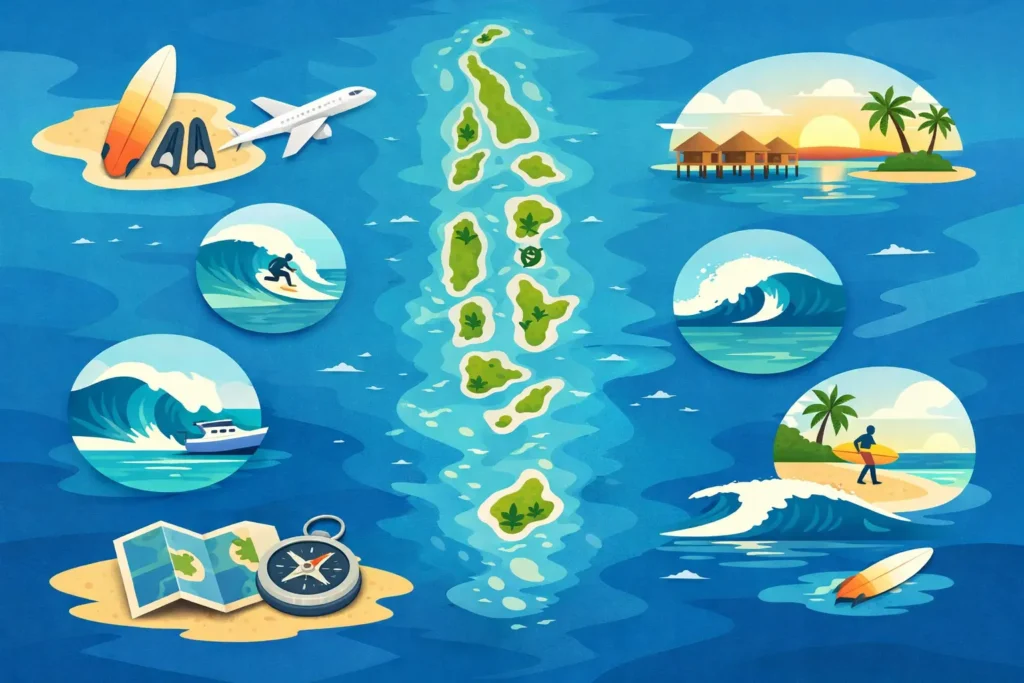
The difference between a dream Maldives surf trip and a frustrating one usually comes down to one thing – choosing the right atoll before you book. The waves are world-class, but they are spread across chains of islands, resort zones, and charter routes. If you want a best Maldives surf breaks map that actually helps with trip planning, you need more than dots on water. You need to know which breaks cluster together, who they suit, and what kind of trip each zone creates.
That is the real map of surfing the Maldives. Not just geography, but rhythm. Some areas are perfect for fast, boat-based strike missions. Others are better for a luxury resort stay with a few memorable sessions built into a broader beach escape. Pick the right region, and the Maldives delivers exactly what you came for – turquoise water, warm reef passes, and long, clean walls that make every paddle-out feel like a bucket-list moment.
How to read the best Maldives surf breaks map
Most Maldives surf breaks are concentrated in a few key atolls, with North Male Atoll and South Male Atoll getting the most attention. That is where many iconic names sit, and it is also where access is easiest from Male and Velana International Airport. For U.S. travelers planning a premium surf vacation, this matters. Less transfer time can mean more time in the water and less time coordinating boats and domestic hops.
Then there are the Central Atolls, where crowds can thin out and the feeling becomes more remote. These zones often work best for liveaboards or travelers willing to build a more surf-first itinerary. The trade-off is simple. Easier access usually means more competition in the lineup, while remoter breaks can deliver a quieter experience but require more logistics.
If you are looking at a surf map for booking purposes, divide it into three practical regions: North Male, South Male, and the Central Atolls. That framework will help you decide where to stay and how to move.
Best Maldives surf breaks map by region
North Male Atoll
North Male is the high-profile heart of Maldivian surfing. It offers the densest concentration of named breaks, a range of wave types, and relatively straightforward access by speedboat from the airport area. If you want a luxury surf trip that blends premium resort comfort with serious wave options, this is often the first place to look.
Pasta Point is one of the names that made the Maldives famous among traveling surfers. It is a long, playful left that can turn on with beautiful shape and speed. The appeal is obvious – mechanical lines, warm water, and a setting that feels polished and exclusive. The catch is access. It is closely tied to nearby resort logistics, so it is not the kind of break you casually drift into without planning.
Sultans is another standout, known for its performance-friendly walls and dependable shape when the swell cooperates. It is a favorite for intermediate to advanced surfers who want room to carve rather than simply survive. Nearby, Honkys offers a softer, more forgiving left that can be a better fit for improving surfers, especially on smaller days.
Jailbreaks deserves a place on any serious map of the region. It is fast, clean, and often one of the most exciting rights in North Male. For surfers chasing speed and sections that ask for commitment, it can be unforgettable. Chickens, just across the channel, is another famous right with long rides and a more rippable face when conditions line up.
North Male gives you variety, but it rarely feels empty. That does not mean it is a bad choice. It means expectations should be realistic. If your goal is convenience, quality, and access to legendary waves, this zone earns its reputation.
South Male Atoll
South Male tends to feel a little less compressed than North Male, while still offering excellent breaks within reach of upscale stays and boat support. For many travelers, this is the sweet spot – enough wave quality to justify the flight, enough breathing room to keep the trip feeling like an escape.
Cokes is the headline act here, and for good reason. It is powerful, hollow, and often one of the most thrilling waves in the country. Advanced surfers love it for its punch and barrel potential. Intermediate surfers should respect it. On the right swell and tide, Cokes is not a place to fake confidence.
Riptides offers another reliable option, with a right-hander that can be playful or serious depending on size. It often appeals to surfers who want performance sections without the same level of intensity as the heaviest days at Cokes. Quarters and Native are also part of the South Male conversation, rounding out a region that rewards boat access and local knowledge.
If North Male feels iconic, South Male often feels strategic. You can still score memorable surf, but your trip may feel a touch more balanced. That matters if you are traveling with a partner, mixing surf with spa time, or trying to keep the vacation luxurious instead of turning it into a pure surf mission.
Central Atolls
When surfers talk about getting beyond the busiest circuit, they usually mean moving south into the Central Atolls. This is where the map stretches out and the trip starts to feel more exploratory. Breaks here are less about easy airport proximity and more about committing to a surf-focused route.
The exact lineup of surfed breaks can vary by season, swell direction, and charter plan, but the broad appeal stays consistent – more space, more movement, and the chance to score uncrowded sessions in extraordinary water color. For some travelers, this is the Maldives at its most magical. For others, it is too much transfer time and not enough resort downtime.
That is the big decision. If your Maldives plan is part surf adventure, part luxury retreat, North or South Male may fit better. If the waves are the main event and you are comfortable with liveaboard life or more involved transfers, the Central Atolls can be a serious upgrade.
Which breaks fit your skill level
A map is only useful if it helps you avoid booking the wrong wave. The Maldives has everything from playful reef setups to sharp, fast breaks that demand timing and confidence.
Beginners should be careful with Maldives marketing. The water looks gentle from the boat, but many breaks are reef passes with real power and consequences. True beginners are usually better off learning with guided instruction in softer conditions rather than paddling straight into famous names. If you are newer to surfing, look for resorts or surf programs that can match you with mellow days, easier corners, and coaching support.
Intermediate surfers have the most to gain from a smart map-based approach. Breaks like Honkys or smaller days at Sultans can offer a thrilling but manageable step up. This is where the Maldives becomes addictive – clear takeoff zones, long walls, and enough shape to push your surfing without turning every session into damage control.
Advanced surfers can aim for the higher-performance breaks and heavier sections, with Cokes, Jailbreaks, and stronger days across both Male atolls standing out. But even for experienced surfers, conditions matter. Tide, wind, swell angle, and crowd positioning can change a break fast.
When to use the map for season planning
The best surf season in the Maldives generally runs from about April through October, with the southwest monsoon bringing the most consistent swell. That is the prime window if your goal is wave quality first. Bigger, more regular surf usually means better odds of scoring the breaks you traveled for.
The shoulder periods can still work, especially if you prefer a softer trip with fewer heavy days. Some travelers actually benefit from this. If you are solid but not hunting barrels, slightly smaller surf can make famous breaks more approachable.
This is why the best Maldives surf breaks map is really a timing tool too. A break that looks perfect in a photo may be underpowered during one window and intimidating during another. Match the season to your level, not just your fantasy.
Stay-and-surf or charter-and-chase?
This is where the planning gets real. Resort-based surf trips are ideal for travelers who want comfort, predictability, and a broader Maldives experience. Think overwater villas, polished dining, easy transfers, and guided access to selected breaks. It is the best fit for couples, premium leisure travelers, and anyone balancing surf with actual vacation time.
Charters and liveaboards are different. They give you mobility. You can follow conditions, shift regions, and build the trip around the waves instead of the room key. The trade-off is that the entire vacation starts to orbit surf conditions. That is perfect for committed surfers and less ideal if someone in your group wants leisurely afternoons on a resort beach.
For many U.S. travelers, the smartest move is choosing one area and building a clean itinerary around it rather than trying to cover everything. That is where a planning-first approach pays off. On Maldives Holiday Islands, the best trips are the ones that know exactly what they want to be before the flight is booked.
What your surf map should tell you before you book
A useful surf map should answer five questions: which atoll you need, what breaks sit nearby, what skill level they favor, how you will access them, and whether the trip style is resort-based or boat-based. If it does not answer those, it is decoration.
For most travelers, North Male is the easiest entry point into iconic Maldives surf. South Male is a strong option if you want excellent waves with a slightly calmer feel. The Central Atolls are for travelers ready to build the whole journey around the chase.
Book the region before you book the fantasy. The Maldives is at its best when your wave choice, hotel style, and transfer plan all line up. Get that right, and every sunrise session feels effortless – the kind of trip you replay long after the tan fades.