
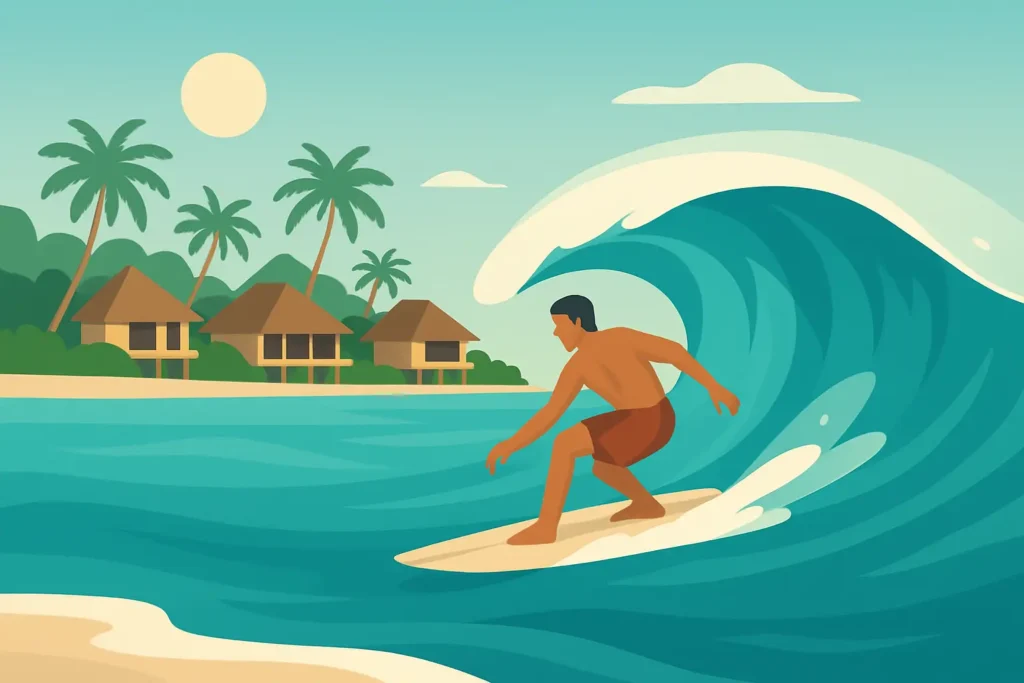
You paddle out over water so clear it looks like air, and the reef below is lit up like a stained-glass window. Then you hear it – that hollow, rhythmic thump of a clean Indian Ocean swell meeting the edge of the atoll. Lohis is one of those Maldives waves that feels almost too perfect to be real. Almost.
Because the magic here comes with conditions: tide, swell angle, wind, and the fact that you’re surfing a living reef. Nail the setup and Lohis can hand you long, smooth walls with just enough punch to feel heroic. Miss the timing and it can feel fussy, fast, and a little sharp in every sense of the word.
Lohis surf break Maldives in one sentence
Lohis is a right-hand reef break in North Malé Atoll known for clean, playful walls that can turn fast and hollow on the right day – a high-reward wave that favors confident intermediates and up.
Lohis sits in the same North Malé Atoll neighborhood as other famous names U.S. surfers recognize on sight: Pasta Point, Sultans, and more. The difference is the personality. Lohis can be friendlier and more forgiving than the heaviest local options, yet still deliver legit Maldives speed and shape when the ocean decides to show off.
What the wave actually does (and why people love it)
Lohis is typically described as a right-hander with a running wall. In plain terms: you’re looking at a wave that invites you to set a line, generate speed, and link turns – with occasional sections that let you tuck in if the swell has enough juice.
On smaller to mid-size days, Lohis can feel like a dream vacation wave. The takeoff is manageable, the face stays open, and you can focus on flow rather than survival. That’s why it lands on so many surfers’ “first Maldives reef break” wish list.
When it’s bigger or the swell hits at the right angle, the wave tightens up. Sections can race, and the lip can start throwing more confidently over the reef. That’s when Lohis stops being just playful and starts feeling like a wave with teeth – still a right-hander you can read, but one that demands cleaner positioning and faster decisions.
Best conditions: swell, wind, and the all-important tide
If you’re planning a Maldives surf trip from the U.S., you’re already doing time-zone math, flight math, and “how many boards can I justify” math. Add one more: tide.
Lohis is a reef break, and reef breaks are honest. They don’t care if you’re on your once-in-a-decade getaway.
Swell direction and size
Lohis likes south swells, which is exactly what the Maldives sees during the main surf season. It can handle a range of sizes, but it shines when there’s enough energy to keep the wall lively without turning the inside too sketchy.
If you’re an intermediate looking for your best chance at a confidence-boosting session, aim for that sweet spot where the wave has push but isn’t detonating. Advanced surfers can hunt bigger days for faster sections and more consequence.
Wind
Like most North Malé setups, Lohis is at its best with light winds. When it’s clean, it’s glossy – the kind of surface that makes every turn feel more precise. If the wind turns onshore, the wave can get bumpy and the timing harder, especially if you’re not used to reef takeoffs.
Tide (this is where trips are won or lost)
Tide controls how forgiving Lohis feels. Too low and the reef is very present – you’ll feel it in your head, your board choice, and your willingness to commit. Too high and the wave can lose some of its bite and shape.
Most surfers prefer a mid tide window where the wave has enough water to feel surfable and safe-ish, while still holding a clean wall. The exact “best” tide can vary by swell size and your comfort level. If you’re newer to reef breaks, give yourself permission to prioritize safety and paddle out when there’s more water moving over the reef.
Who Lohis is best for (and when it depends)
Lohis has a reputation for being approachable, but approachable in the Maldives still means you’re surfing over reef with real power.
Confident intermediates often have the most fun here. If you can consistently angle takeoffs, control speed down the line, and kick out cleanly without panicking, Lohis can feel like a private lesson in surfing better.
Beginners should be cautious. If you’re still learning to pop up under pressure, still falling often, or still unsure where to sit in a lineup, the Maldives can punish that learning curve. A better plan is to build your base on smaller, softer conditions – or work with a local guide or coach who can put you in the right spot at the right time.
Advanced surfers will enjoy Lohis as a performance canvas on smaller days and a quick, technical wave on bigger ones. The trade-off is that it may not always be the heaviest, most iconic barrel on offer in the atoll. If your goal is pure consequence, you may chase other breaks when they light up. If your goal is consistent quality with room to open up your surfing, Lohis stays in the conversation.
Access: how you actually surf Lohis
One of the big reasons people fall for North Malé Atoll is the logistics. You can pair serious surf with serious comfort. You’re not roughing it unless you choose to.
Lohis is typically accessed via nearby resorts and surf-focused operations that run boats to the break. That means you can be eating a relaxed breakfast, checking the conditions, and then motoring out to turquoise perfection without turning your vacation into an expedition.
There’s a practical upside to that convenience: you can chase the best tide window instead of being stuck at one spot all day. A clean, well-timed 90-minute session can beat a long, stubborn paddle in questionable conditions.
If you want a planning hub that keeps the surf-first mindset but still speaks luxury travel, Maldives Holiday Islands is built for exactly that – surf, dive, and those “how is this real” lagoon moments that turn a trip into a story you keep telling.
Boards and gear: what tends to work at Lohis
You can surf Lohis on your everyday shortboard if you’re used to reef breaks and you’re traveling with a quiver. But many travelers are surprised by how much they appreciate a slightly more user-friendly board here, especially if they’re jet-lagged or not surfing daily at home.
A step-down or performance groveler can be ideal on smaller days when you want speed through flatter sections. On more solid swells, a standard shortboard with a touch of extra foam helps you get in early and set your line before the wave stands up.
Bring reef protection for your feet if you’re not comfortable barefoot on coral and rock. Some surfers hate the feel of booties, others love the confidence they provide when you’re hopping in and out of the boat or dealing with a shallow inside. It depends on your tolerance and how sharp the reef is running that day.
Sunscreen is non-negotiable, and a long-sleeve rash guard can be the difference between “glowing from vacation” and “cooked by day three.” The Maldives sun is intense, especially when you’re on the water for hours.
Lineup vibe and etiquette
Maldives lineups can feel different than a crowded California beachbreak. The setting is calmer, the water is clearer, and the wave often breaks in a defined takeoff zone that makes positioning obvious.
That clarity can be a gift and a challenge. It’s easy to see who’s deepest, whose turn it is, and who’s drifting too wide. If you’re used to messy, shifting peaks, you’ll want to tighten up your etiquette. Wait your turn, don’t snake, and communicate when needed.
Crowd levels depend on season, swell, and how many boats are operating. On prime days, you should expect company. If you want the most relaxed experience, prioritize dawn patrol sessions, shoulder-season windows, or days when the forecast is good but not headline-grabbing.
Safety on a reef break: confidence without complacency
Lohis isn’t the place to “hope for the best” with reef. You don’t have to be scared, but you do need to be deliberate.
If you wipe out, protect your head and come up calmly. Don’t fight the ocean blindly. Get your bearings, look where you are relative to the reef and the channel, and move with intention.
Also, respect your fatigue. Many U.S. surfers arrive after long travel, jump straight into overhead surf, and wonder why their timing feels off. Give yourself a session or two to dial in reef takeoffs, speed, and kickouts. Your best waves of the trip often come after you stop trying to force them.
How to build a Lohis day that feels like the Maldives
A Lohis session hits different when it’s part of a full-day rhythm: surf while the light is soft, reset in comfort, then go find a second ocean obsession.
If you’re traveling with non-surfers, Lohis is a strong choice because the vibe can be balanced. You can get your adrenaline, then meet back up for lagoon time, spa time, or a sunset cruise that makes the whole trip feel shared.
And if you’re a surf-and-dive traveler, North Malé Atoll makes it easy to mix disciplines without feeling like you’re compromising. Surf in the morning, then swap the board for fins and go chase coral color and clear visibility later in the day.
The best part is that Lohis doesn’t demand you suffer for it. You’re still in the Maldives – turquoise water, warm air, and that rare feeling that your body is tired for the right reasons.
The helpful closing thought: plan Lohis like you’d plan a special dinner – show up at the right time, with the right expectations, and it will taste better than you imagined.